This content comes from James Taylors facebook page that can be reproduced with acknowledgement: https://www.facebook.com/james.t.roverphile
The Rover P6 was assembled not only in Britain but also in several overseas locations, using CKD (“Completely Knocked Down”) kits of parts sent out from Solihull. This part of its story remains largely unknown even now, and very little new information has became available since I pulled the known facts together in my P6 book that was published in 2020.
As with so many other Roverphile subjects, I’m sure there is more information out there to be found, and using Facebook is one of the best ways to prompt people who know something to come forward with it. So here goes.
T
hanks for reading this post. It’s number 217 in the series that I started in July 2022, and it’s quite a long one. Please click the “Like” button if you enjoy it. If you want to share it, go ahead – but remember that “shares” do not automatically copy over the Comments and therefore the pictures that are included in them. If you want to draw on the information it contains, please don’t forget to acknowledge where you found it.
ROVER P6 ASSEMBLY OVERSEAS
First, it’s worth noting that not every variant of the P6 was assembled overseas. There were 2000s and 2000TCs in both RHD and LHD, and 2000 Automatics and 2000TC Mk IIs in RHD only. Of the V8s, the Three Thousand Five was assembled overseas with both RHD and LHD, and the 3500 Mk II in RHD only. There was no overseas assembly of the 3500S, or of any of the 2200 models.
The problem we have is that Rover did not keep records of where the CKD cars went. The sets of components were prepared by a dedicated department and shipped by a third party (Export Packing Ltd, of Banbury); their details were not recorded in the ledgers of the Despatch Department that tell us so much about the fully-built cars because they did not pass through that department. In a nutshell, there are no records. Everything we know has to be built up from scraps of information and from sightings of actual cars.
I have identified seven countries outside the UK where P6s were assembled – and that’s one more than I knew about when I wrote the book in 2020. The one I didn’t know about was the Republic of Ireland, and I still don’t know much about what happened there. So here’s a summary of what I do know, country by country.
Belgium
The assembly plant at Malines (Mechelen) initially belonged to Standard-Triumph but passed to Leyland when the two companies merged in 1961. We know that assembly of Rover 2000SC models began at Malines at the end of April 1967; the cars were 404-series models with left-hand drive, destined for sale in Europe. The Belgian operation subsequently took on the 2000TC (419 series) and the Three Thousand Five (429 series), and was still building them in 1970. That’s all we know so far.
Costa Rica
There’s very little information here. A plant in San José had been assembling Land Rovers since 1963, and presumably the P6s were assembled there too. All we know is that they took six Three Thousand Fives in 1970, presumably 429-series LHD cars.
Eire
Standard-Triumph (Eire) assembled P6s alongside Triumphs at a plant in Cashel Road, in the Dublin suburb of Kimmage. Dates were probably the mid-1960s, so these were probably 2000s (402 series). There may have been 2000 Automatics (407 series) and 2000TCs (417 series), but the operation had probably ended by 1968.
Malta
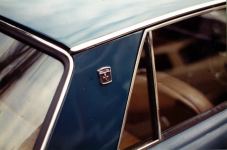
Assembly of P6s in Malta probably began in May 1968, and was carried out by Car Assembly Ltd of Marsa. This company had been building a variety of British cars from CKD kits since it opened in 1963. All the Maltese cars had a small badge with a Maltese Cross on each rear quarter-pillar (the hardware of the badge actually came from Rootes). They were sold locally and also exported to Greece, Israel and Tunisia. There is evidence for assembly of 2000s (402 series) in 1969, and for assembly of 2000TCs (417 series) and 2000TC Mk IIs (448 series) between 1969 and 1971.
The Rover P6 was assembled not only in Britain but also in several overseas locations, using CKD (“Completely Knocked Down”) kits of parts sent out from Solihull. This part of its story remains largely unknown even now, and very little new information has became available since I pulled the known facts together in my P6 book that was published in 2020.
As with so many other Roverphile subjects, I’m sure there is more information out there to be found, and using Facebook is one of the best ways to prompt people who know something to come forward with it. So here goes.
T
hanks for reading this post. It’s number 217 in the series that I started in July 2022, and it’s quite a long one. Please click the “Like” button if you enjoy it. If you want to share it, go ahead – but remember that “shares” do not automatically copy over the Comments and therefore the pictures that are included in them. If you want to draw on the information it contains, please don’t forget to acknowledge where you found it.
ROVER P6 ASSEMBLY OVERSEAS
First, it’s worth noting that not every variant of the P6 was assembled overseas. There were 2000s and 2000TCs in both RHD and LHD, and 2000 Automatics and 2000TC Mk IIs in RHD only. Of the V8s, the Three Thousand Five was assembled overseas with both RHD and LHD, and the 3500 Mk II in RHD only. There was no overseas assembly of the 3500S, or of any of the 2200 models.
The problem we have is that Rover did not keep records of where the CKD cars went. The sets of components were prepared by a dedicated department and shipped by a third party (Export Packing Ltd, of Banbury); their details were not recorded in the ledgers of the Despatch Department that tell us so much about the fully-built cars because they did not pass through that department. In a nutshell, there are no records. Everything we know has to be built up from scraps of information and from sightings of actual cars.
I have identified seven countries outside the UK where P6s were assembled – and that’s one more than I knew about when I wrote the book in 2020. The one I didn’t know about was the Republic of Ireland, and I still don’t know much about what happened there. So here’s a summary of what I do know, country by country.
Belgium
The assembly plant at Malines (Mechelen) initially belonged to Standard-Triumph but passed to Leyland when the two companies merged in 1961. We know that assembly of Rover 2000SC models began at Malines at the end of April 1967; the cars were 404-series models with left-hand drive, destined for sale in Europe. The Belgian operation subsequently took on the 2000TC (419 series) and the Three Thousand Five (429 series), and was still building them in 1970. That’s all we know so far.
Costa Rica
There’s very little information here. A plant in San José had been assembling Land Rovers since 1963, and presumably the P6s were assembled there too. All we know is that they took six Three Thousand Fives in 1970, presumably 429-series LHD cars.
Eire
Standard-Triumph (Eire) assembled P6s alongside Triumphs at a plant in Cashel Road, in the Dublin suburb of Kimmage. Dates were probably the mid-1960s, so these were probably 2000s (402 series). There may have been 2000 Automatics (407 series) and 2000TCs (417 series), but the operation had probably ended by 1968.
Malta
Assembly of P6s in Malta probably began in May 1968, and was carried out by Car Assembly Ltd of Marsa. This company had been building a variety of British cars from CKD kits since it opened in 1963. All the Maltese cars had a small badge with a Maltese Cross on each rear quarter-pillar (the hardware of the badge actually came from Rootes). They were sold locally and also exported to Greece, Israel and Tunisia. There is evidence for assembly of 2000s (402 series) in 1969, and for assembly of 2000TCs (417 series) and 2000TC Mk IIs (448 series) between 1969 and 1971.